
Industrial Fin Tubes Excellence
High-efficiency heat transfer solutions for boilers, heat exchangers, and industrial applications. Engineered for maximum thermal performance and durability.
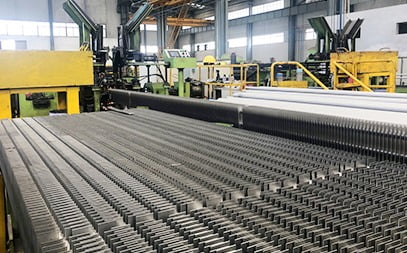
Fin Tube Solutions Guide
Comprehensive answers to the most critical questions from power plant operators, industrial facility managers, and engineering contractors worldwide.
What are fin tubes and how do they improve heat transfer efficiency?
Fin tubes are specialized heat exchanger components featuring extended surfaces (fins) attached to the base tube. These fins dramatically increase the heat transfer surface area, improving thermal efficiency by 3-10 times compared to bare tubes.
Key Benefits:
- Enhanced Heat Transfer: Up to 10x surface area increase
- Compact Design: Smaller equipment footprint
- Energy Efficiency: Reduced fuel consumption
- Cost Effective: Lower operational expenses
Technical Specifications
All specifications comply with ASME, GB, and EN standards for international deployment.
What types of fin tubes are available for different applications?
Spiral Fin Tubes
Continuous helical fins for maximum heat transfer in gas-to-liquid applications.
Longitudinal Fin Tubes
Straight fins running parallel to tube axis for high-pressure applications.
Square Fin Tubes
Rectangular fins for air-cooled heat exchangers and condensers.
How to select the right fin tube materials for your application?
Material Selection Matrix
Carbon Steel (A179, A192)
Stainless Steel (304, 316L, 321)
Alloy Steel (T11, T22, T91)
Selection Criteria
Operating Temperature
Material must withstand continuous operating temperature with safety margin
Corrosive Environment
Consider fluid chemistry, pH levels, and presence of corrosive compounds
Mechanical Stress
Thermal expansion, pressure cycles, and vibration considerations
Economic Factors
Initial cost vs. lifecycle value and maintenance requirements
Expert Consultation: Our engineering team provides free material selection guidance based on your specific operating conditions.
What manufacturing standards ensure fin tube quality and reliability?
ASME Standards
- • ASME SA-179 (Carbon Steel Tubes)
- • ASME SA-213 (Alloy Steel Tubes)
- • ASME SA-249 (Stainless Steel Tubes)
- • ASME BPVC Section I & VIII
Chinese GB Standards
- • GB/T 8163 (Seamless Steel Tubes)
- • GB/T 5310 (High-Pressure Boiler Tubes)
- • GB/T 14976 (Stainless Steel Tubes)
- • GB 150 (Pressure Vessels)
European EN Standards
- • EN 10216-2 (Seamless Steel Tubes)
- • EN 10217-7 (Stainless Steel Tubes)
- • EN 13480 (Metallic Industrial Piping)
- • PED 2014/68/EU Directive
Quality Control Process
Material Testing
Chemical composition, mechanical properties verification
NDT Inspection
Ultrasonic, radiographic, dye penetrant testing
Dimensional Check
Precise measurement of all critical dimensions
Documentation
Complete traceability and certification package
What are the best practices for fin tube installation and maintenance?
Installation Best Practices
Pre-Installation Checklist
- • Verify tube dimensions and specifications
- • Check tube sheet hole alignment and tolerances
- • Inspect for transportation damage
- • Prepare welding procedures and qualifications
- • Ensure proper lifting and handling equipment
Installation Procedures
- • Maintain proper tube support during installation
- • Use appropriate tube expansion techniques
- • Follow specified welding sequences and parameters
- • Perform post-weld heat treatment if required
- • Conduct pressure and leak testing
Critical Safety Points
- • Protect fins from mechanical damage
- • Maintain cleanliness during installation
- • Follow confined space safety protocols
- • Use proper PPE and safety equipment
- • Document all installation steps
Maintenance Schedule
Daily Inspections
Monthly Maintenance
Annual Overhaul
Troubleshooting Guide
What is the cost-benefit analysis of upgrading to fin tubes?
Investment Breakdown
Compared to bare tubes, including manufacturing and materials
Additional handling care required for fin protection
Specialized cleaning and inspection requirements
Total Investment Impact
Initial capital investment increase over bare tube systems
Return on Investment
Improved heat transfer efficiency reduces fuel consumption
Smaller equipment footprint reduces installation costs
Lower carbon footprint and compliance cost savings
Payback Period
Typical ROI timeline based on energy savings and efficiency gains
Real-World Case Study
Technical Specifications
Comprehensive technical data and performance parameters for professional engineering applications.
Dimensional Range
| Parameter | Range | Standard |
|---|---|---|
| Tube OD | 15-150 mm | ASME/GB/EN |
| Wall Thickness | 1.5-8.0 mm | ±0.1 mm tolerance |
| Fin Height | 2-20 mm | Custom available |
| Fin Thickness | 0.5-3.0 mm | ±0.05 mm tolerance |
| Fin Pitch | 2-25 mm | 1-10 FPI |
| Length | Up to 18 m | Transport limited |
Custom Dimensions: Special sizes available upon request with engineering review and feasibility analysis.
Performance Parameters
Heat Transfer Enhancement
Operating Conditions
Efficiency Metrics
Quality Assurance
Ready to Optimize Your Heat Transfer?
Connect with our engineering team for custom fin tube solutions tailored to your specific industrial requirements.